
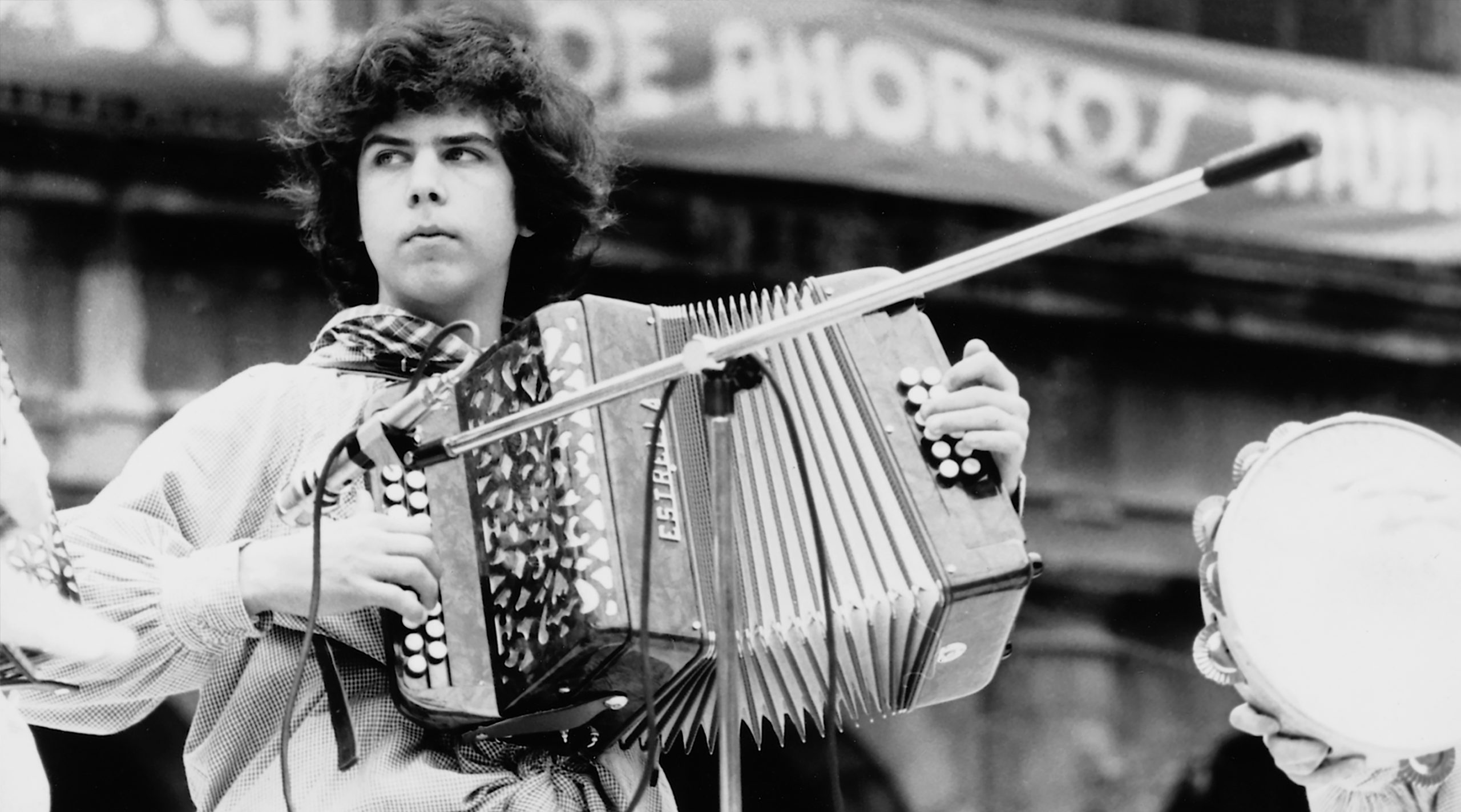
Kepa Junkera (Bilbao, 1965), spent his childhood and youth in Bilbao’s Rekalde neighbourhood, something that undoubtedly shaped his character. His first contact with music came through his aitite (maternal grandfather), who used to accompany his daughter Concha — Kepa’s mother — on tambourine during the village festivals, while she took her first dance steps as Txilibrin’s partner. Today, Kepa is considered one of the leading figures in contemporary Basque music. Trikitilari, composer and producer, he has been a tireless creator who brought the trikitixa — the traditional Basque diatonic accordion — onto stages all over the world. His musical curiosity, openness to other cultures and deep respect for his roots have turned his work into a bridge between the local and the universal.
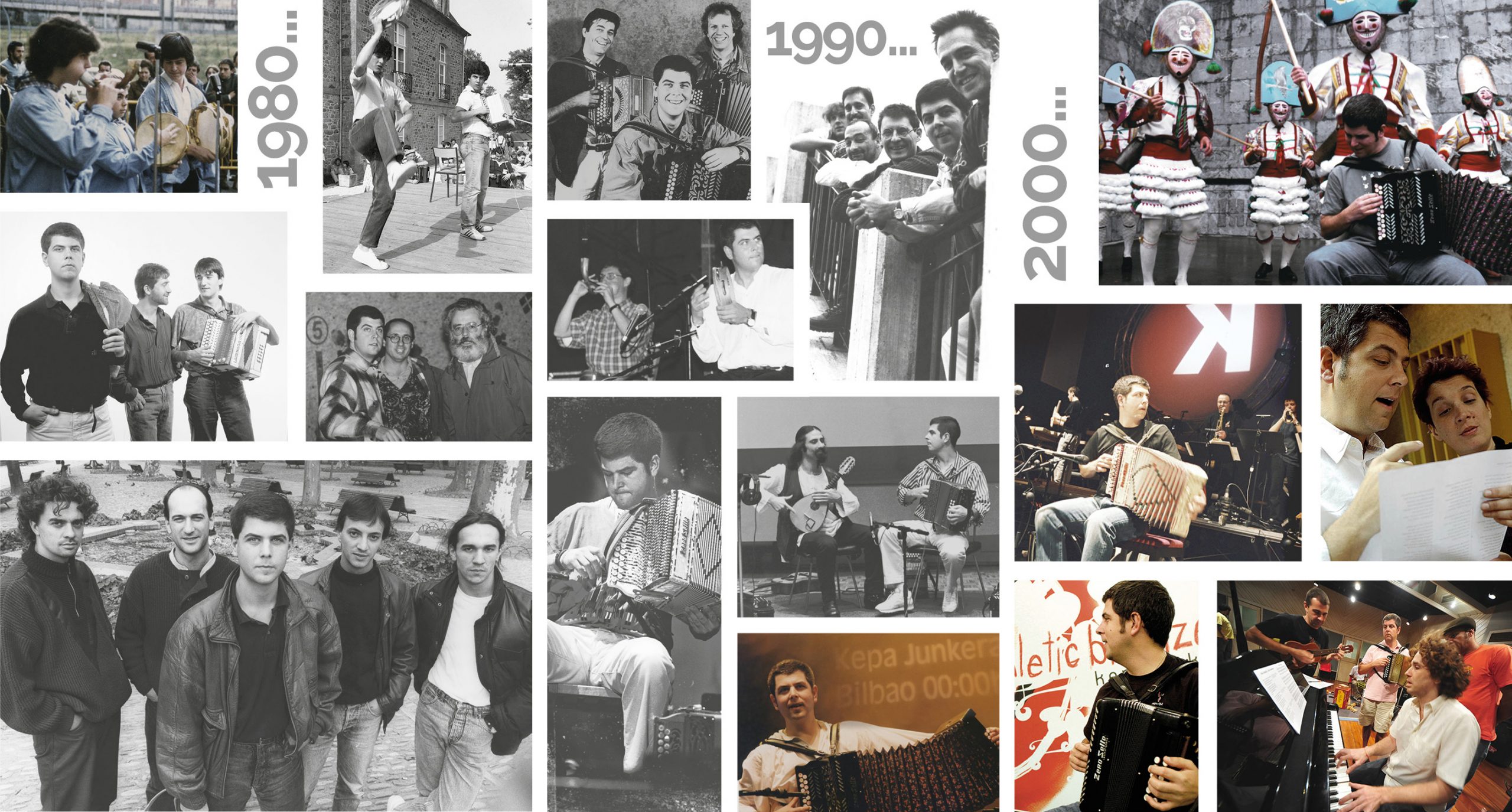
Since his early childhood, he absorbed the popular musical and cultural atmosphere of Bilbao and quickly showed an unusual passion for music. After being part of groups such as Kepa, Zabaleta eta Motriku, he began a solid solo career, developing a personal language that combines tradition, experimentation and emotion. His music draws from Basque folklore while engaging in a dialogue with Mediterranean, Atlantic and Latin American sounds, creating a highly recognisable and powerful sonic identity.
Throughout his career, Kepa has collaborated with artists from all over the world and has received numerous awards, including the Latin Grammy for Best Folk Album for K. Beyond the awards, his legacy lies in having renewed traditional Basque music and projected it internationally without ever losing its authenticity or roots.
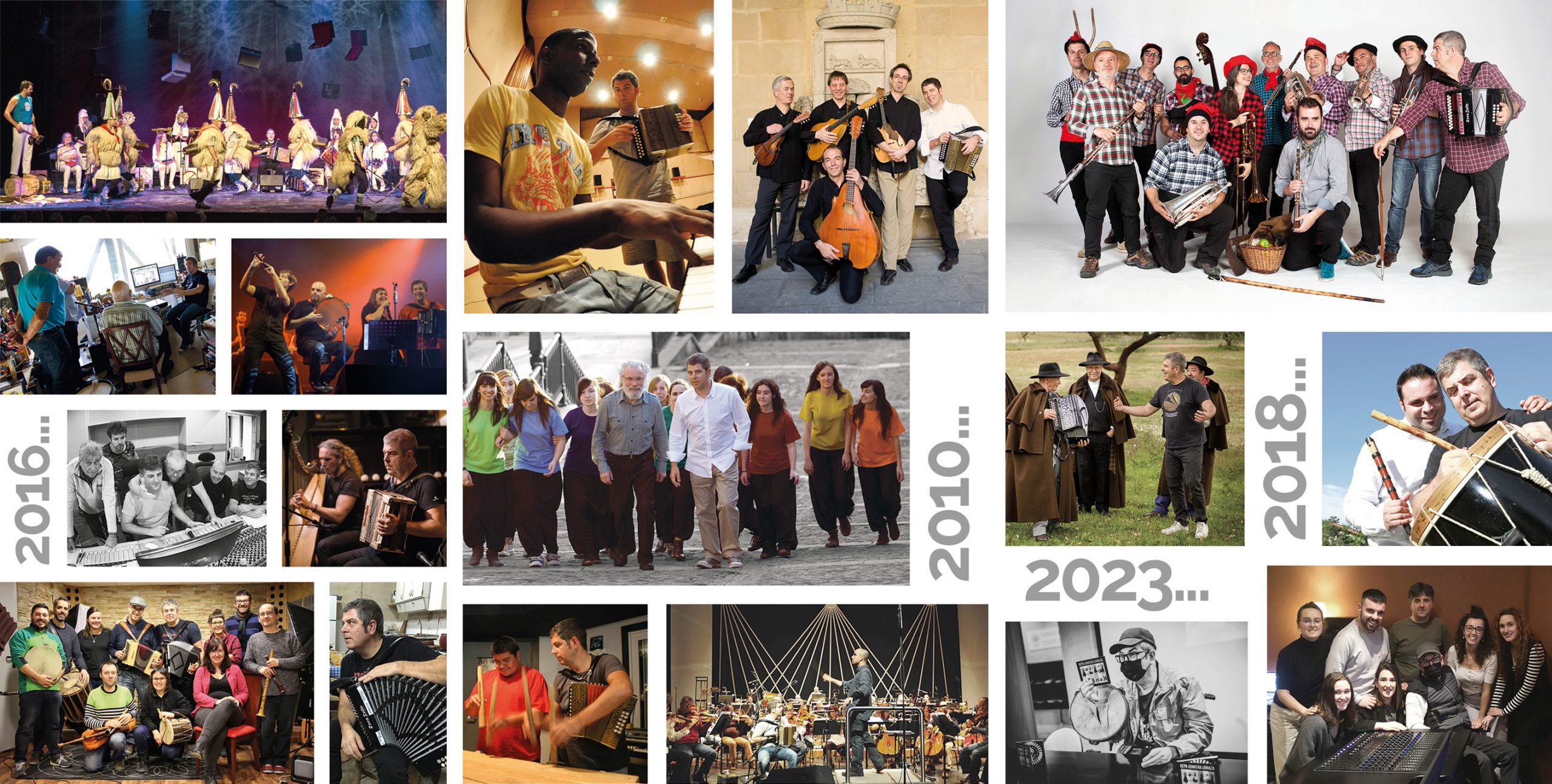
In December 2018, a serious health problem forced him away from the stage. Yet his creative drive remains intact. Despite limitations, Kepa continues developing new projects and keeping his music alive. In 2023 he released Erromeriak, an album featuring previously unreleased material celebrating the collective strength of women tambourine players and Basque popular tradition. His perseverance and passion continue to stand as an example of artistic vitality and love for music.
With a career spanning more than thirty years, Kepa has built one of the most substantial and personal bodies of work in the Basque musical landscape. His way of understanding the trikitixa transformed a traditional instrument into a universal language capable of crossing borders and emotions. Each of his albums is both an exploration and a declaration of love for music: an invitation to listen to the heartbeat of a people in constant motion. Without a doubt, a remarkable legacy.
DISCOGRAFY
Early years
- Infernuko Auspoa (1987) – Recorded at Elkar studios alongside Iñaki Zabaleta and José Mari “Motriku” Santiago, with the support of musicians from the highly influential Basque band Oskorri. Jean Phocas handled the mixing. A debut combining traditional rhythms and coplas by Xabier Amuriza with a fresh and precise sound.
- Triki Up (1990) – In collaboration with Imanol Urkizu and Iñaki Zabaleta. An early fusion of trikitixa with new textures; an album announcing his desire for experimentation.
- Trikitixa Zoom (1991) – An expansion of traditional sound towards a freer and more contemporary language.
- Trans-Europe Diatonique (1993) – Alongside Riccardo Tesi and John Kirkpatrick; a European journey through the diatonic accordion.
- Kalejira Al-buk (1994) – Consolidation of his personal style, featuring a more urban sound and elaborate arrangements.
- Lau Eskutara (1995) – Collaboration with Portuguese musician Júlio Pereira; a meeting point between two Atlantic traditions.
- Leonen Orroak (1996) – With Ibon Koteron; a tribute to the alboka, an instrument deeply rooted in Basque folklore, and traditional albokaris such as Leon Bilbao.
International Recognition
- Bilbao 00:00h (1998) – A collective project dedicated to his hometown; more than 40 musicians participated in this key album in his career.
- Tricky! (2000) – Energetic and open sound; a blend of Basque folk with global influences.
- Maren (2001) – Maritime and melodic echoes marked by openness to cultural diversity.
- K (2003) – Recorded live at the Arriaga Theatre; it earned him the Latin Grammy for Best Folk Album.
- Athletic Bihotzez (2004) – A musical tribute to Athletic Club de Bilbao; an intimate and popular work.
- Hiri (2006) – An urban reflection on Basque identity; a sonic portrait of the city and its people.
Creative Maturity
- Etxea (2008) – Double album featuring 24 traditional Basque songs and more than 30 international collaborators. The first instalment in what would become the Etxea-Kalea-Herria trilogy.
- Provença Sessions (2009) – Recorded in the south of France accompanied by the mandolin quartet Melonius Quartet, reinterpreting compositions from different albums; a return to a more intimate studio format.
- Kalea (2009) – Second part of the Etxea-Kalea-Herria tri, featuring artists from Latin America; a celebration of a cultural encounter celebraing the traditional Basque songbook.
- Habana Sessions (2010) – Fusion between trikitixa and Cuban music in this collaboration with pianist Rolando Luna; a vibrant dialogue between shores recorded in Cuba.
- Beti Bizi (2010) – With Leioa Kantika Korala; a blend of young voices and electronic textures.
- Herria (2010) – Completing the Etxea-Kalea-Herria trilogy, this album features 24 tracks recorded in studios all over the world with internationally renowned artists.
- Ultramarinos & Coloniales (2011) – Tribute to the old grocery and colonial goods stores of Bilbao, whose products once arrived from far away territories. Kepa’s trikitixa and percussion are joined by local musicians such as José Luis Canal, Iñigo Olazabal and Argibel Euba.
- Ipar Haizea (2011) – The project brings together eight emblematic pieces from his career, reinterpreted instrumentally alongside the Euskadiko Orkestra Sinfonikoa.
- Galiza (2013) – Tribute to the Galician people and their music, bringing together leading artists such as Budiño, Luar Na Lubre, Uxía, Cristina Pato, Os Cempés, Susana Seivane and many others in this journey through roots music.
Latest Projects
- Trikitixaren Historia Txiki Bat (2014) – Together with the group Sorginak, a return to his roots through a musical narrative about the history of the trikitixa and a tribute to the pioneering trikitilaris who influenced him the most.
- Maletak (2016) – Inspired by migrations and memory, it consists of 17 original pieces bringing together more than one hundred artists from different musical traditions across the Iberian Peninsula.
- Enllà (2017) – Collaboration with Catalan harpist Josep María Ribelles. The project is built upon the dialogue between harp and trikitixa, with ten compositions combining traditional pieces and original works by Ribelles.
- Samurai Accordion (2017) – Alongside Kepa participated Riccardo Tesi, Irish musician David Munnelly, Finnish accordionist Markku Lepistö and Italian Simone Bottasso, all internationally recognised figures within the diatonic accordion scene.
- Fok (2017) – Double CD featuring 54 tracks performed by more than two hundred musicians from Catalonia, País Valenciá, the Balearic Islands and L’Alguer, in which the trikitixa merges with the Mediterranean sonic universe.
- Kirineoc (2018) – Project born from the collaboration between Kepa and Cobla Sant Jordi after the Fok concert. With arrangements by Pedro Lamas and conducted by Jordi Molina, they reinterpret 19 of Kepa’s pieces through a contemporary approach and the distinctive sound of the cobla ensemble, recorded at 44.1 with all musicians playing simultaneously.
- Ath-thurdâ (2018) – A one-week residency in Évora based on Alentejo singing traditions, featuring Mara, Beatriz Nunes, Celina da Piedade, Antonio Bexiga, Galandum Galundaina, Gigabombos and other local collectives. It gathers 22 pieces combining traditional repertoire and Kepa’s own compositions.
- De Mano en Mano (2018) – A digibook promoted by Kepa Junkera together with Luis Antonio Pedraza, recorded at Oliene, Kepa’s own studio. The project brings together 13 traditional pieces from Zamora and the Portuguese borderlands, featuring historical instruments and a final composition by Kepa, “3amora”, as the only track including trikitixa.
- Erromeriak (2023) – In this project, Kepa directs more than 40 female tambourine players from the Basque Country, Cantabria, Asturias, Galicia, León, Valladolid and Portugal, accompanying him in a deeply personal tribute to this instrument. This first album of his new artistic stage offers eight previously unreleased tracks, completed by seven additional recordings specially arranged for the project.