
Ultramarinos & Coloniales
Kepa Junkera
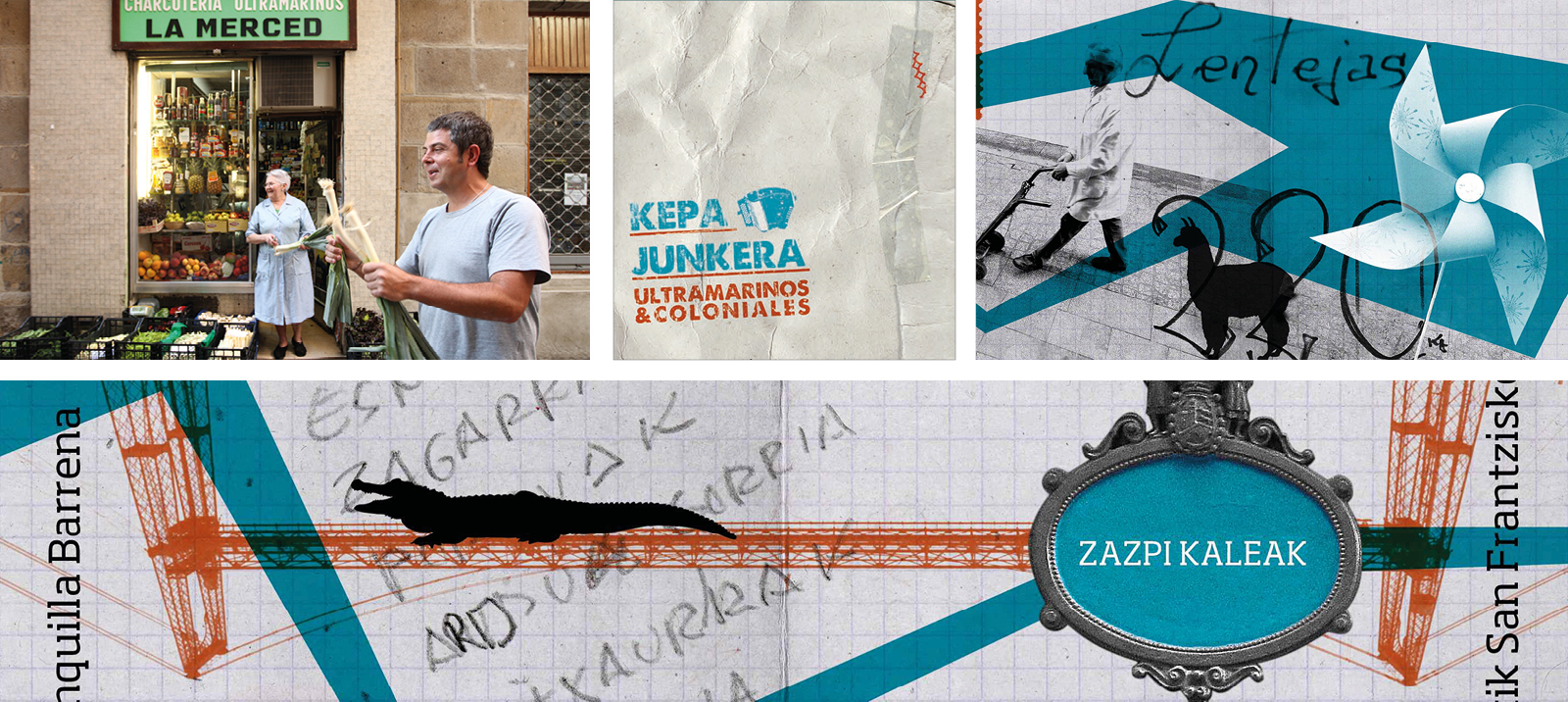
Ultramarinos & coloniales emerged after the intense experience of the trilogy Etxea, Kalea and Herria, together with several interspersed projects. Kepa decided to focus this work on his closest environment: the corners of Bilbao that shaped his childhood, paying tribute to the small traditional shops that are gradually disappearing. The musician defines the album as “joyful, alive and free”, with compositions that grow and open themselves to the listener, allowing each person to discover what the songs evoke in them. The graphic design was once again entrusted to the agency Pulgón, as in the previous trilogy.
Unlike the instrumental austerity of the trilogy, this album of twelve compositions combines trikitixa, alboka and txalaparta with more conventional instruments such as piano, drums, bass and percussion, establishing a solid harmonic foundation that allows space for the development of each piece. The piano, in particular, takes on a central role, accompanying and sustaining the textures of the traditional instruments.
The album revolves around two complementary ideas: the close and artisanal relationship embodied by neighbourhood shops (the local), and the travelling dimension of overseas and colonial goods that once arrived from distant places (the global). This reflection inspired Kepa, together with Fernando Lorenzo, Inma Roiz and Alberto Palomera, to create neologisms naming several compositions: “Lisbao” (Lisbon + Bilbao), “Zokale” (Mexico City’s Zócalo + the Zazpi Kale of Bilbao’s Old Town) and “Someneiro” (Somera + Rio de Janeiro). Other titles such as “Fueros Aires” or “Barranquilla Barrena” reflect the same blending of the nearby and the distant.
The musical line-up combines Kepa’s trikitixa and percussion with local musicians: José Luis Canal contributes piano, keyboards and programming; Iñigo Olazabal and Argibel Euba add txalapartas and around ten exotic percussion instruments; while the rhythmic foundation is provided by Rober Caballero on bass and Luis Ángel Telleria “Telle” on drums. David Honigmann’s review in the Financial Times highlighted the “attack of the wooden xylophone” in the txalaparta and the “subtle Bo Diddley rhythm” present in “Lisbao”, underlining the freshness and local character of the project.
The album presentation took place at the neighourhod pork butcher’s and grocery shop La Merced, hosted by shopkeeper Bego Uria, who had spent more than thirty years behind the counter. Kepa, himself a regular customer, wanted the launch to reflect the closeness and affection conveyed by the music associated with these spaces. The album also includes a text by poet and novelist Kirmen Uribe, reflecting on how the small shops of the past contained “an entire world”, whereas modern supermarkets offer only “three or four things”, evoking the loss of warmth and intimacy in everyday life.
Record label: Hiri Records & Warner. Production: Kepa Junkera.