
Kepa Junkera & Sorginak
Trikitaxaren historia txiki bat
Kepa Junkera & Sorginak
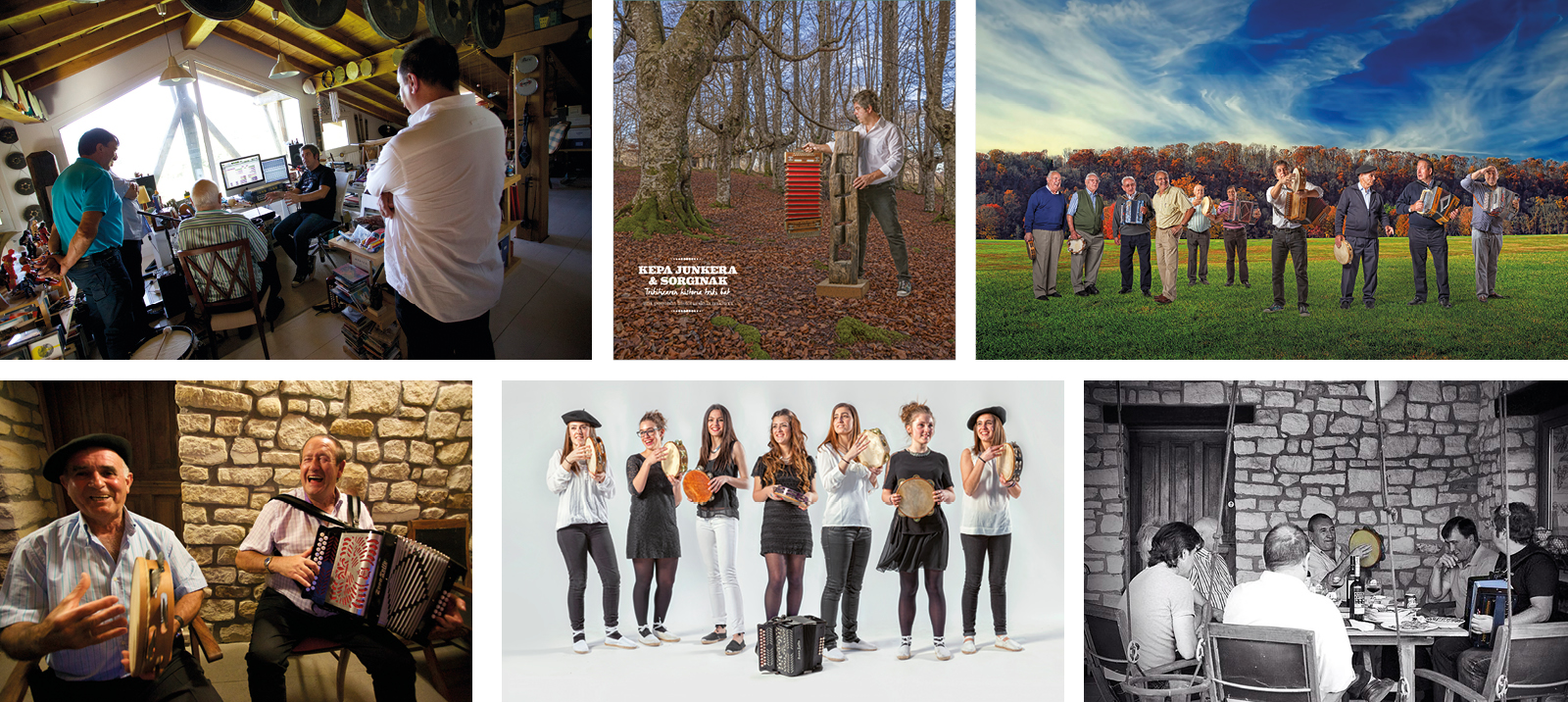
Kepa Junkera & Sorginak celebrates Kepa’s 35-year career and represents a return to his roots, connecting the history of the trikitixa in the Basque Country —an instrument that arrived more than 150 years ago with Italian railway workers— with a tribute to the trikitilaris who have most deeply influenced him. The project takes the form of a deluxe format: a digibook of more than 150 pages, combining photographs by Igotz Ziarreta, illustrations by Alberto Palomera and texts by Joxean Agirre. Kepa explains: “With this work, I wanted to pay tribute to my family (my mother and grandfather, who played the tambourine), to the friends I started playing with and to the musicians I admire: Laja, Fasio, Rufino, Epelde, Sakabi, Leon…”
This album also marks Kepa’s first collaboration with Sorginak, a female group formed by girls aged between fifteen and eighteen from Arrasate, Zizurkil, Zarautz and Deba. Some of them play the trikitixa in addition to the pandero, and surprise audiences live by dancing fandango, arin-arin or performing on the txalaparta. Eneritz Aulestia, from Zarautz, recalls: “We play the pandero differently; at village festivals we use strength, but on stage the style is more refined and elegant. Kepa values simple rhythms played with precision.”
The album’s seventeen compositions rely solely on triki, voices and percussion. Eight are sung pieces using traditional verse texts, while the remaining tracks are instrumental. Several compositions pay tribute to friends and musical references: “Laja eta bere txapelak”, “Landakanda, Iturbide eta Motriku”, “Epelderen irribarrea”, “Sakabi Fasiorekin hizketan”, “Zumarragako trikitixa”, “Jacinto Rivera ‘Elgeta’” and “Larrinaga-Guerrini”. Through technology, Kepa also incorporates the sound of his grandfather’s pandero in “Roman eta Kontxa Urraza Zollon”.
The album was mainly recorded at Kepa’s home studio in Oliene (Busturia), while the vocal recordings took place at Elkar studios. Alongside Sorginak, friends and musicians such as Motriku, Landakanda, Iturbide, Leturia and Imanol participated in “Zazpiak bat fandangoa”, Eliseo Parra in “Baltseo txikia” and Xabier Díaz in “Trikitrilariak gera”.
The photographic design is situated in meaningful locations: the cover portrays Kepa in the forests of Urkiola, while other images were taken at Otuna Jauregia in Meñaka, the chapel of La Antigua or near his home alongside Laja and Landakanda. Igotz Ziarreta, an advocate of photography in real locations, was forced to resort to photomontage due to Kepa’s tight schedule: “There was only one opportunity with Kepa and Sorginak, so we photographed them against a white background and created the compositions afterwards.”
Record label: Infernuko Auspoa & FOL & BOA. Production: Kepa Junkera.