
Enllà
Josep María Ribelles & Kepa Junkera
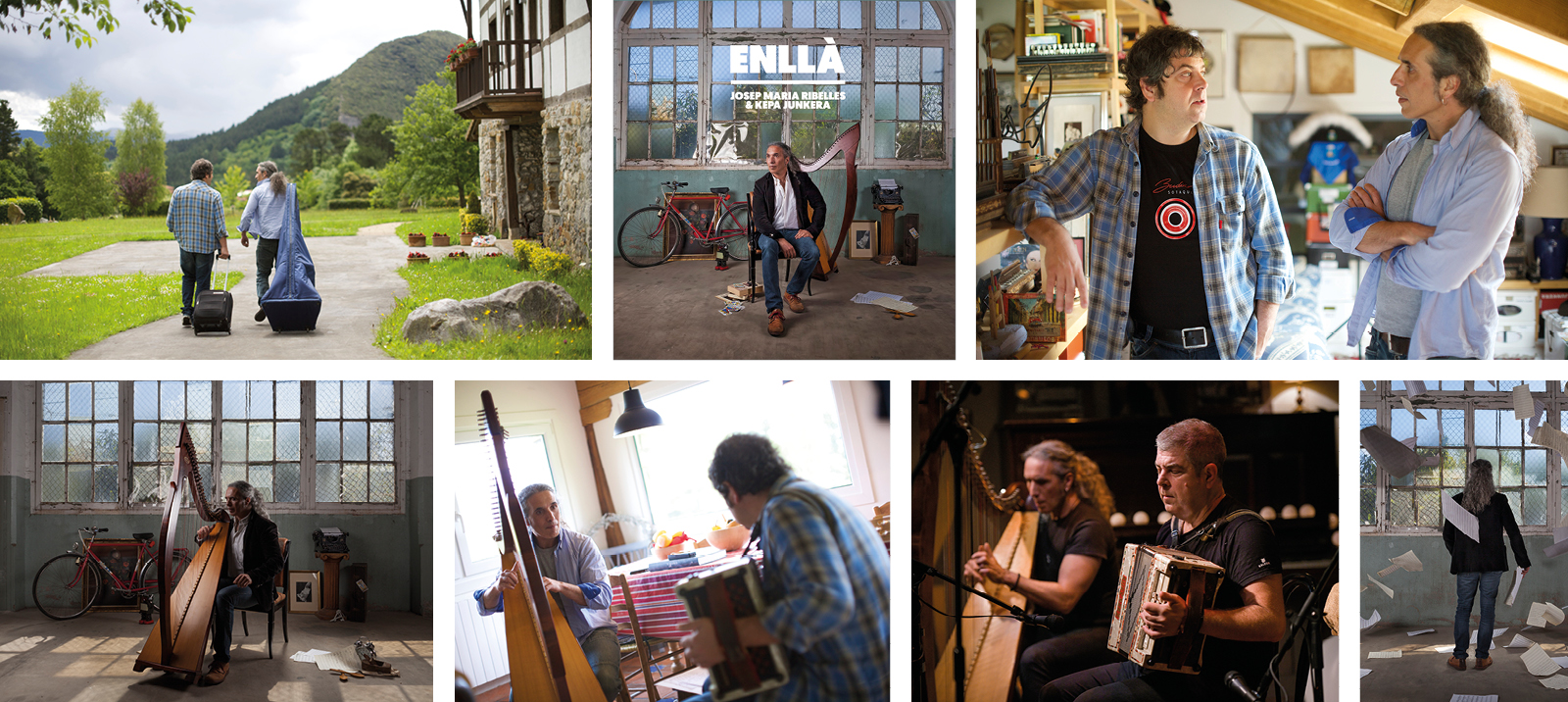
Enllà emerged from the collaboration between Josep María Ribelles and Kepa Junkera, a meeting that dates back to 2005 thanks to Carlos Beceiro (La Musgaña). Ribelles, a harpist trained at the Conservatori Superior del Liceu in Barcelona and recognised for his innovative contribution to contemporary Catalan folk music, had worked both as a session musician and teacher, besides collaborating with groups such as El Anzuelo de Fuego and Nébeda. Kepa’s first appearance on Ribelles’ solo album Ondines ballen (2011) marked the beginning of a fruitful artistic and personal relationship between the two musicians.
The concept behind Enllà is built upon the affinity between harp and trikitixa, a dialogue Ribelles describes as “highly powerful and productive”, highlighting Kepa’s ability to find sonic spaces and explore previously unheard timbral landscapes. The collaboration resulted in ten compositions combining traditional pieces with original works by the harpist. Ribelles would usually develop the pieces first on the harp and, once completed, send them to Kepa to receive suggestions, complete arrangements and add trikitixa, percussion or other elements in the studio.
The album alternates Catalan titles such as “Dansa de Castellterçol”, “Ball de montanya/nua”, “Ball d’Apatxetak”, “Danses” and “Vals de tardor” with Basque compositions such as “Sorginak akelarrera”. Instrumental pieces predominate, although female voices are occasionally incorporated in both languages. The cover photograph, taken by Igotz Ziarreta, portrays the harpist inside a factory in Badalona, reinforcing the connection between music and space.
The project recalls other four-handed collaborations by Kepa, such as Lau eskutara with Júlio Pereira or Habana sessions alongside Cuban pianist Rolando Luna, although Ribelles admits he barely knew these projects at the outset, apart from a few shared performances in concerts in support of the Lau eskutara album. The combination of harp and trikitixa remains unusual, and Kepa himself commented that the album “will not be fully understood until some years have passed”.
Beyond the music itself, Ribelles emphasises the importance of the human factor: the memory of enjoying playing alongside Kepa, learning directly on stage and the sense of complicity that naturally emerged during performances. “We have always laughed a lot together and, when it comes to playing, Kepa gives it all!” he says, revealing the enthusiasm and commitment both artists brought to every interpretation.
Record label: Infernuko Auspoa. Production: Kepa Junkera and Josep María Ribelles.